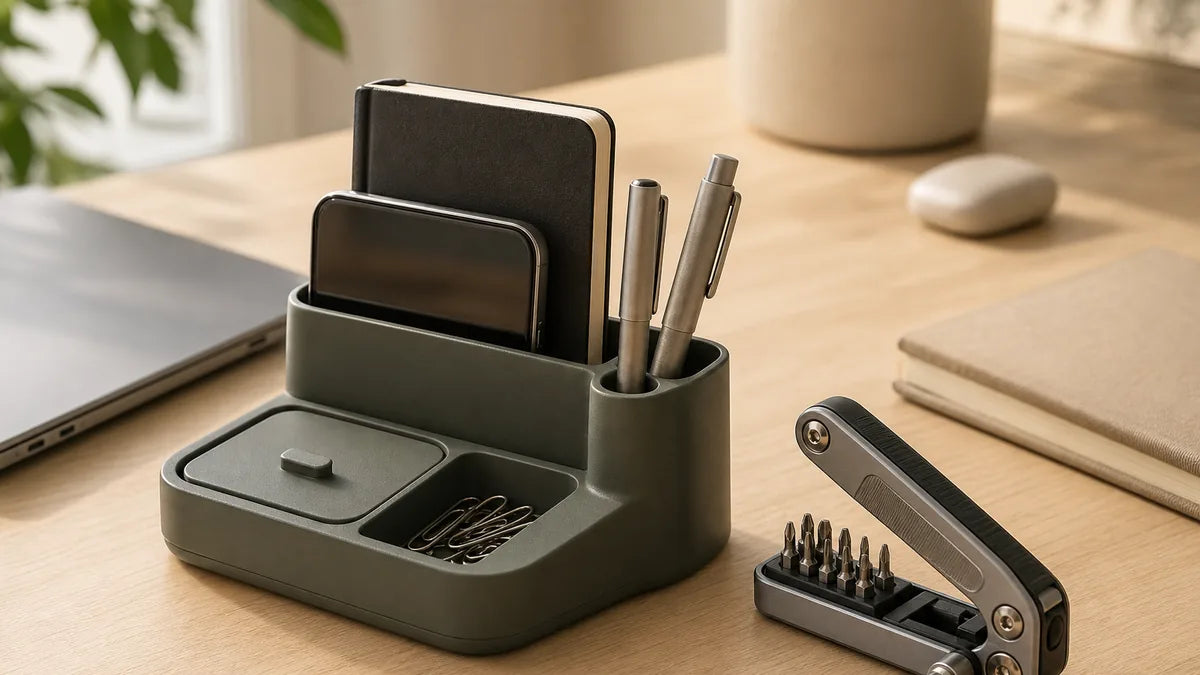
A gift feels complete when the main item, the presentation and the little "oh, you thought of that too" add-on all point in the same direction. You do not need elaborate wrapping wizardry. You need a clear gift story: who it is for, how they will use it, and what small extra makes the moment easier, funnier, more useful or more personal.
This guide is not a tissue-paper origami masterclass. It is a practical LatestBuy gift-discovery path for making presents feel finished across gadgets, games, desk bits, travel helpers, keepsakes, novelty finds and budget-friendly extras. If you are still choosing the main gift, start with the broader LatestBuy gifts hub, then use the ideas below to make the final handover feel less "here is a box" and more "yes, this is absolutely for you".
The complete-gift formula: main gift, moment and mini add-on
The easiest way to make a gift feel more thoughtful is to stop treating wrapping as the final panic step. Presentation works best when it supports the use of the gift. A travel gadget with a compact pouch, a family game with snacks and a planned night, or a desk toy with a practical organiser all feel more complete because the recipient can picture the gift in action straight away.
Think of the add-on as the bridge between "nice item" and "I know exactly why you chose this". It does not have to be expensive. In fact, the best small add-ons are often modest, useful and weirdly satisfying: spare batteries, a cable tidy, a display stand, a travel sleeve, a notebook, a snack pairing, a cleaning cloth, a tiny tool, a gift card for the activity around the gift, or a printed photo tucked into the card.
| Gift job | Details |
|---|---|
| Make life easier |
Main gift example: Gadget, desk helper, compact tool Add-on that completes it: Batteries, cable organiser, case, label, cleaning cloth Presentation move: Bundle the add-on where it will be used first |
| Create a night in |
Main gift example: Game, puzzle, activity gift Add-on that completes it: Snacks, scorepad, playlist, "first round tonight" note Presentation move: Wrap as an invitation, not just an object |
| Add personality |
Main gift example: Novelty desk item, nostalgic piece, quirky homeware Add-on that completes it: Personal note, themed card, small related trinket Presentation move: Let the first visible clue hint at the joke |
| Support a hobby |
Main gift example: Craft, collecting, tinkering or outdoor helper Add-on that completes it: Storage, magnifier, pouch, spare consumable, guide note Presentation move: Pack in a "ready-to-start" order |
| Keep it budget-friendly |
Main gift example: Small practical gift or fun mini find Add-on that completes it: Handwritten note, simple upgrade item, reusable bag Presentation move: Make the message do the heavy lifting |
Match the presentation to the recipient, not the wrapping trend
Good gift presentation is not about making every present look like it belongs in a moody lifestyle shoot beside a ceramic vase. The wrapping should fit the recipient. Your organised friend may appreciate neat layers and labelled pieces. Your chaos-goblin sibling may love a clue-based unboxing. Your practical parent may care less about ribbon and more about whether the batteries, cable or setup bits are included.
Start with the recipient's tolerance for fuss. Some people enjoy a slow reveal. Others want the item, the purpose and the snack immediately, preferably without wrestling twelve metres of tape. Presentation should reduce friction, not become a tiny administrative obstacle course.
Choose add-ons by gift type so the bundle makes sense
Small add-ons work when they are connected to the main gift's use. Random extras can feel like you emptied a drawer into a bag and hoped for chemistry. A connected add-on makes the gift feel intentional, even when the budget is tight.
For gadget and electronics gifts, think "setup and support". A charging cable, cable-management pouch, screen cloth, batteries, stand, compact tool or travel case can make the recipient feel ready to use the item rather than ready to hunt through a drawer. If the recipient likes tech-adjacent practical gifts, browse electronics and gadgets with the add-on in mind: Will they use this at a desk, in the car, while travelling, or around the house?
For desk, hobby or tinkering gifts, make the workspace easier. A magnifier, small organiser, storage tray, notebook, lamp, care cloth or compact tool can turn the gift into a little workstation moment. For example, a desk gadget can feel more complete when paired with something that tidies, supports or protects it. If you are leaning into useful-but-fun discoveries, gadget gifts are a natural browse path.
If they already own the basic gadget, choose the adjacent upgrade

This is the replacement-logic sweet spot: when someone already owns the obvious version of a gift, do not buy them a duplicate unless you know they want a spare. Choose the adjacent item that makes their existing setup more personal, more portable, more organised or easier to use. That is how a small add-on can become the real hero.
If they already have the basic gadget, ask what friction still exists around it. Do they have cables everywhere? Do they travel with it awkwardly? Does it need storage? Does it sit unused because setup is annoying? Do they have the tool but not the light, case, organiser, stand or maintenance bit that makes it pleasant to use?
| If they already have... | Details |
|---|---|
| A standard charger |
Choose this instead: Cable organiser, travel cable pouch or compact stand Why it feels more complete: Solves the daily mess around the gadget |
| A favourite desk device |
Choose this instead: Desk tidy, lamp, magnifier, cleaning cloth or small support tool Why it feels more complete: Improves the actual place they use it |
| A game collection |
Choose this instead: Expansion-adjacent accessories, scorepad, storage or snack-night bundle Why it feels more complete: Supports the ritual without risking a duplicate |
| Outdoor gear |
Choose this instead: Compact utility, weather helper, carry pouch or car-friendly accessory Why it feels more complete: Adds usefulness without replacing their favourites |
| Kitchen basics |
Choose this instead: Specialised helper, ingredient pairing or reusable storage Why it feels more complete: Makes the gift feel like a planned first use |
| Hobby tools |
Choose this instead: Storage, display, care item, light or magnification support Why it feels more complete: Helps them enjoy the hobby with less faff |
Build the unboxing moment without making it a circus
Unboxing is not only about packaging. It is the order in which the recipient discovers the thought behind the gift. A good unboxing moment gives them context quickly: what it is, why you chose it, and how they can enjoy it. A bad one involves too much tape, no obvious point, and someone politely saying "Oh wow!" while wondering where the scissors are.
Use a simple three-step reveal:
- First clue: the card, tag or visible add-on hints at the gift's purpose.
- Main reveal: the gift is easy to access and not buried under decorative chaos.
- Use cue: the small add-on, note or setup piece shows what to do next.
Budget, recipient risk and occasion filters that stop overbuying

A complete-feeling gift does not mean a bigger gift. It means fewer gaps. If your budget is modest, spend the add-on effort on fit and presentation, not volume. One useful extra plus a specific note often beats a pile of unrelated minis. For budget-conscious browsing, the under $30 gifts collection can help you find low-pressure add-ons or smaller complete gifts without turning the present into a financial thriller.
Use this buyer-confidence module before you add anything extra:
| Confidence check | Details |
|---|---|
| Who it suits |
Good fit: Recipients who appreciate usefulness, humour, hobbies, shared activities or a clear "I thought of you" cue Skip or simplify when: They dislike clutter, have strict tastes, or prefer experience-only gifts |
| Who should skip add-ons |
Good fit: Not applicable if the add-on solves a real use need Skip or simplify when: Skip if the add-on is purely filler, bulky, messy, or likely to be regifted instantly |
| Setup or compatibility risk |
Good fit: Low-risk extras such as storage, cleaning, organisation, notes, snacks or display supports Skip or simplify when: Avoid cables, batteries, refills or technical accessories unless you know the right type |
| If they already have the basic item |
Good fit: Choose an adjacent helper: organiser, stand, case, care item, portable version or activity pairing Skip or simplify when: Do not buy another near-identical gadget, mug, tool or game unless they collect multiples |
| Public or office appropriateness |
Good fit: Safe humour, practical desk items, group games and clean presentation Skip or simplify when: Avoid risqué jokes, private references or anything that needs too much explaining |
| Storage and clutter |
Good fit: Compact, consumable, reusable or purpose-built add-ons Skip or simplify when: Avoid oversized baskets, decorative filler or "cute but homeless" objects |
A practical pre-giving checklist for the final five minutes
The final five minutes before handing over a gift are where good intentions either shine or unravel into "I forgot to take the price sticker off". A quick checklist saves the day. It also stops you from over-decorating when the gift already has a clear purpose.
Before wrapping or bagging the gift, run through this:
- Remove or cover irrelevant labels where appropriate, without damaging packaging or instructions.
- Keep instructions, safety information and warranty details with the item if they matter.
- Check the add-on actually matches the gift rather than just matching the colour scheme.
- Avoid compatibility guesses for cables, refills, chargers or technical parts unless you know the recipient's setup.
- Include batteries or basic consumables only when you are confident they are the correct type.
- Write one specific sentence in the card: "For your camping kit", "For game night", "For your desk setup", "For the shelf that needed chaos".
- Pack the gift in use order: clue or note first, main item next, setup add-on last or beside it.
- Make it easy to open if the recipient is younger, older, travelling, at work or opening in a group setting.
- Keep the unboxing tidy enough that they do not need a cleanup crew and a small apology.
Smart presentation ideas by occasion

Different occasions carry different pressure. A birthday gift can be playful and personal. A work gift needs to behave itself in public. A housewarming gift should feel immediately useful. A farewell gift often needs a little memory tucked inside. The same wrapping style will not suit all of them, unless your personal brand is "brown paper bag and sincere panic".
For birthdays, build around the recipient's personality. A gadget lover might get a tech helper with a setup add-on. A game lover might get an activity gift with snacks and a "first play" note. A nostalgia fan might appreciate a keepsake-style reveal where the card explains the memory behind the choice.
For workplace gifts, keep it clean, useful and not too intimate. Desk gadgets, small organisers, group games and practical accessories tend to be safer than highly personal items. Presentation should be tidy, easy to open and not dependent on an inside joke that half the room cannot decode.
Frequently asked questions about gift wrapping, unboxing and add-ons
What small add-ons make a gift feel more thoughtful?
The best small add-ons are useful, personal or connected to the first use of the gift. Think batteries for a gadget, snacks for a game, a cable organiser for tech, a cleaning cloth for a screen or display item, a pouch for travel, or a handwritten note explaining why you chose the gift. Avoid random filler unless it strengthens the story.
How do I make a budget gift feel more complete?
Make a budget gift feel complete by adding context, not clutter. Pair the main item with one useful add-on, a small treat, batteries or accessories if needed, and a short note that explains the thought behind it. Presentation helps too: tidy wrapping, a simple bundle and a clear first-use moment can make a lower-cost gift feel chosen rather than padded.
Should I wrap a gift differently for postage or travel?
Yes. If the gift needs to travel, protect the item first and make the presentation second. Use sturdy packaging, avoid fragile decorative pieces, and keep any note or small add-on secure inside the parcel. For in-person gifting, you can focus more on the reveal; for postage, the best wrapping is the kind that arrives intact.
Follow the gift path and finish the moment
The finishing touch should make the gift easier to use, easier to enjoy or easier to understand. Start with the recipient, choose the main gift, then add one thoughtful support piece and a note that explains the "why". That is the difference between a present that lands politely and one that feels properly complete.
Ready to build the bundle? Browse the LatestBuy gift guide for main-gift inspiration, check electronics and gadgets for useful add-on paths, or keep it simple with budget-friendly gifts under $30. Pick the path, add the small clever bit, and let the unboxing do its little victory lap.